
Posted in Personal Injury
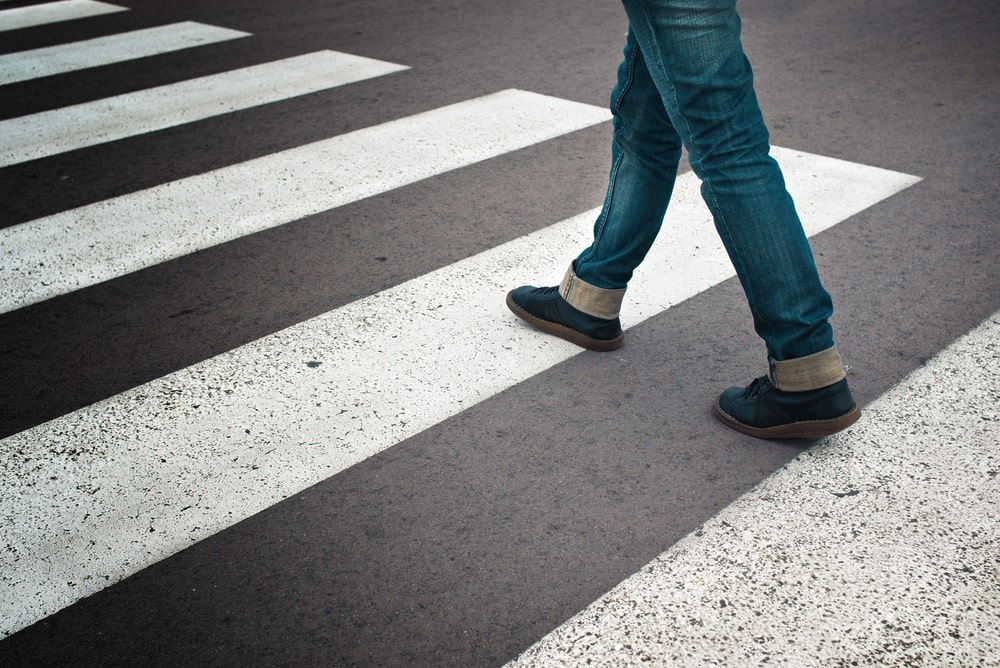
Pedestrian crashes raise a basic question about who had the right of way. Wisconsin answers it in a statute that treats marked and unmarked crosswalks the same way. The sections below follow what that rule asks of drivers and of people on foot.
Wisconsin gives pedestrians the right of way at crosswalks
Wisconsin Statutes section 346.24 tells a driver to yield to a pedestrian crossing in a marked or unmarked crosswalk at an intersection or crosswalk without traffic signals or an officer controlling it. The yield duty applies when the pedestrian crosses consistent with the safe use of the crosswalk.
The statute covers unmarked crosswalks as well as painted ones, so missing stripes don’t cancel the driver’s duty. A pedestrian hit at a corner with no paint on the pavement can still point to this rule.
Pedestrians carry duties too
Subsection (2) bars a pedestrian from suddenly leaving a curb or other place of safety and walking into the path of a vehicle so close that the driver can’t yield. A driver who couldn’t stop in time may point to that rule when blame is assigned.
An injured pedestrian facing that argument would want an Oak Creek personal injury lawyer to reconstruct the distance and the timing from the physical evidence. Skid marks and the point of impact answer those questions.
Fault becomes the central dispute after a crash
Blame is the point both sides argue over after a crosswalk crash, and each side builds its account from the same video, testimony, and physical evidence. Distance, speed, and timing carry the argument.
Each side’s conduct becomes an issue early, so pedestrian fault considerations deserve attention before any recorded statement is given. Subsection (2) binds walkers too.
Signal-controlled crossings follow a different statute
Crossings controlled by traffic signals fall under a separate statute, so the facts about the signal matter before anyone decides which rule applies. The signal phase when the pedestrian stepped off the curb is the first fact to pin down.
A driver’s insurer can press the argument that the walker caused the crash, for example when a pedestrian is at fault for stepping out between parked cars. Photographs and video taken soon after the crash show where the walker stood and how far away the car was.
Evidence that belongs in the file
Evidence about the crossing itself carries the claim:
- Photographs of the crosswalk markings, signs, and signals from the driver’s approach.
- Bystander statements that record who saw the crash and where each witness stood.
- The crash report and the officer’s note of where the pedestrian stood.
- Video from doorbells, businesses, or dash cameras near the crossing.
- Treatment notes that tie each injury to the crash.
A pedestrian struck near an Oak Creek intersection would start with an Oak Creek car accident lawyer who can match the police report against the crossing photographs. The report fixes the time and the parties, and the photographs fix the layout.
The same statute applies across Milwaukee County
Section 346.24 is a statewide law, so a crossing in the next town meets the same questions about who had to yield. The place of the crash changes the scene but not the rule.
Someone hurt downtown while visiting would bring the same crossing questions to a Milwaukee personal injury lawyer, since the statute applies in every Wisconsin city. The pavement, the signals, and the lighting differ from block to block, so the photographs matter.
Records from the first week carry weight
A pedestrian’s account of the crash is more persuasive when it matches a report, a photograph, and a medical record made close to the event. Gaps between the crash and the first statement raise questions.
A person hit in a neighboring suburb would take the same records to a Franklin personal injury lawyer and ask the same first question about who had to yield. The answer starts with the crosswalk and the signal, and then the records show where each person was when the crash happened.
At Hickey & Turim, S.C., our attorney Bryan J. Paradise graduated from the University of Wisconsin Law School in 2004. He was admitted in Minnesota in 2007 and is a member of the State Bar of Wisconsin.
Whether the statute reaches a particular crash depends on the scene, and a pedestrian can reach out to an Oak Creek personal injury lawyer to go over the records with that question in mind. Video and witness details should be collected in the first days.